


Key Takeaways:
- Instant access
- Multichannel support
- Personalization
- Proactive Engagement
The hospitality industry has always known the secret of treating guests well. The key factors of a successful experience in a hotel are comfort and facilities. The increasing use of new technologies has resulted in a major change. One of the primary changes is in guest expectations. Guests look for instant responses and communication.
This is where the chatbot technology was created for the hospitality industry. From the ability to have immediate guest contact to automatic customer room bookings. AI chatbots for hotels are making it possible for this industry to provide excellent service.
In this blog, we see the impact that AI-powered chatbots are having on hotel operations.
The Growth of AI Chatbots in Hospitality: Key Statistics
The AI version in the hotel industry is rapidly increasing. It is reported that 65% of hotels and resorts have used AI chatbots for reservations or guest support. Meanwhile, 70% of guests find chatbots helpful for simple requests, such as Wi-Fi passwords. They find them helpful even for room service orders. Although many still prefer human help for other concerns.
The global AI in the hospitality and tourism sector is set to reach $58.56 billion by 2029, while growing at a CAGR of 30. 1%. The growth of chatbots is high. The market is likely to reach $11.80 billion in 2026. Moreover, 58% of the guests believe that AI upgrades their stay. Whereas 82% of business travelers rely on AI tools for their bookings and support.
These conclusions underline a trend that is clear by Gartner. Guests want their interactions to be instant and digitally focused. The hotels using guest messaging software integrated with AI, their demands met easily.
What Makes an AI Chatbot for Hotels So Innovative?
An AI chatbot for hotels utilizes natural language processing (NLP), machine learning. It even utilizes property management system (PMS) integration. This helps to conduct conversations that sound like humans. Modern chatbots can learn from conversations and adjust to consumer preferences. They can answer complicated queries with ease, unlike earlier rule-based ones.
Key areas that need conversion include:
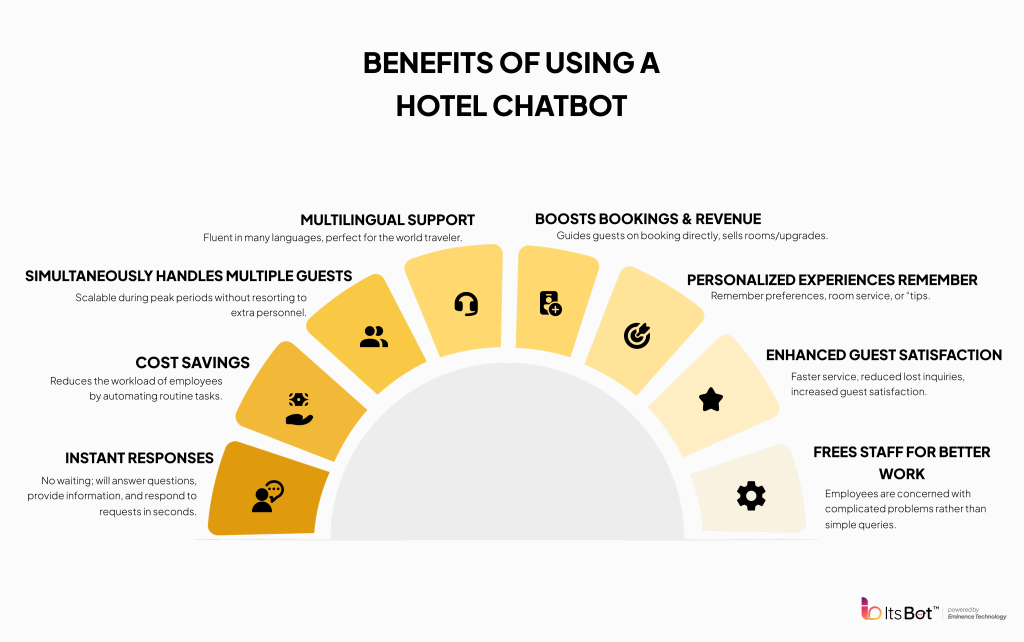
- Instant access — No waiting for the phone to ring. No more voice messages.
- Multichannel support — Through the website, WhatsApp, SMS, and apps using guest message software.
- Personalization — Remembering past visits, preferences, and loyalty information.
- Proactive Engagement — Sending welcome messages, weather notifications, or upsell notices.
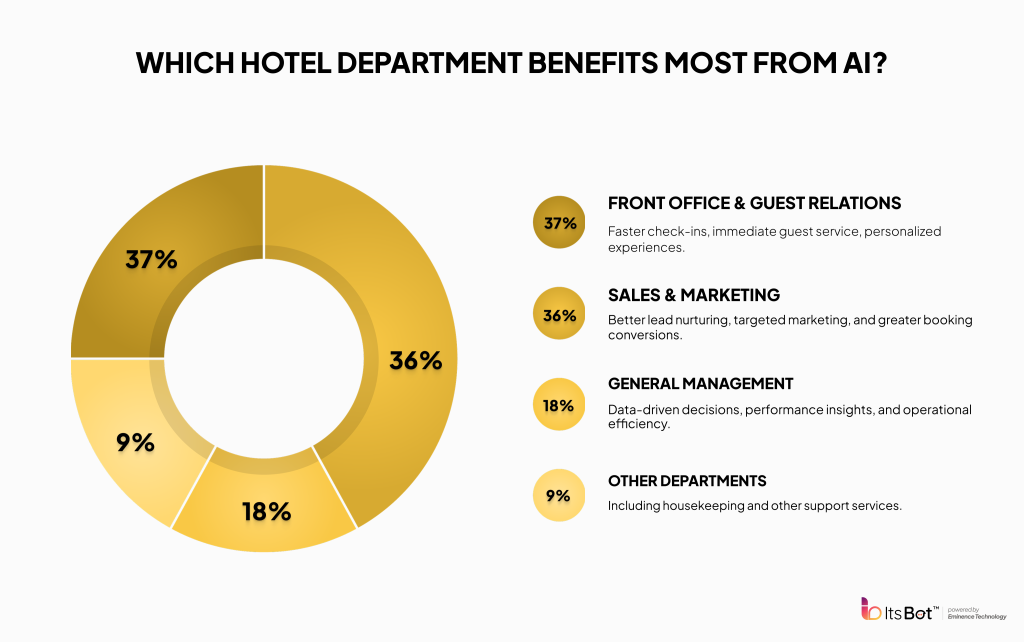
According to hubspot, the staff can concentrate on better interactions with the help of the automated processes. This increases guest satisfaction and work efficiency.
Upgrading Communication with Guest Messaging Software
Guest messaging software using AI techniques gives the ability to communicate easily. This is both ways, with their choice of communication methods. Guests need not call or send an email for their inquiries. Instead, they message the hotel for their needs about check-in times. This is also helpful for the recommendations of the place.
For the international traveler, the capability to provide instant translation resolves issues related to language. Analytics available from the platforms include different trends. These can be the pattern of many inquiries made for spas, to help hotels improve on what to provide. Case studies have shown significant reductions. Such as one hotel that decreased the average time to respond to an inquiry from 10 minutes to under 30 seconds. This results in a 30% reduction in the number of slashing calls.
AI Hotel Booking Assistant: From Inquiry to Confirmation in Seconds
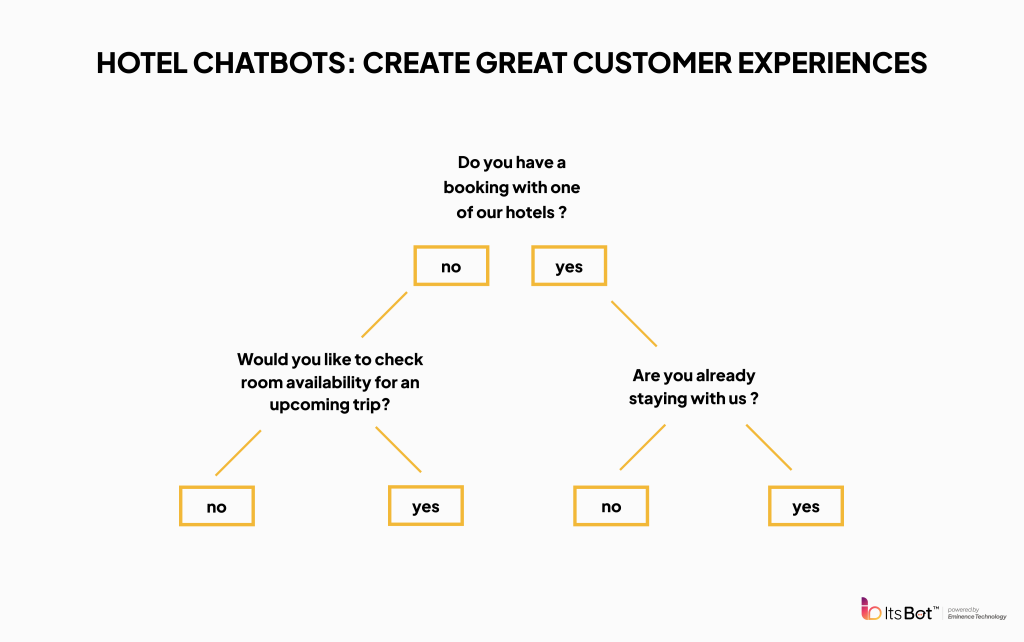
The AI hotel booking assistant converts an informal conversation into a confirmed booking. A customer could say “Family room at Mumbai during Diwali weekend with a pool view” and get a confirmed result by the AI booking assistant within a conversation format itself.
This makes for lower rates of rejection and enables a significant number of direct bookings, removing fees for OTAs.
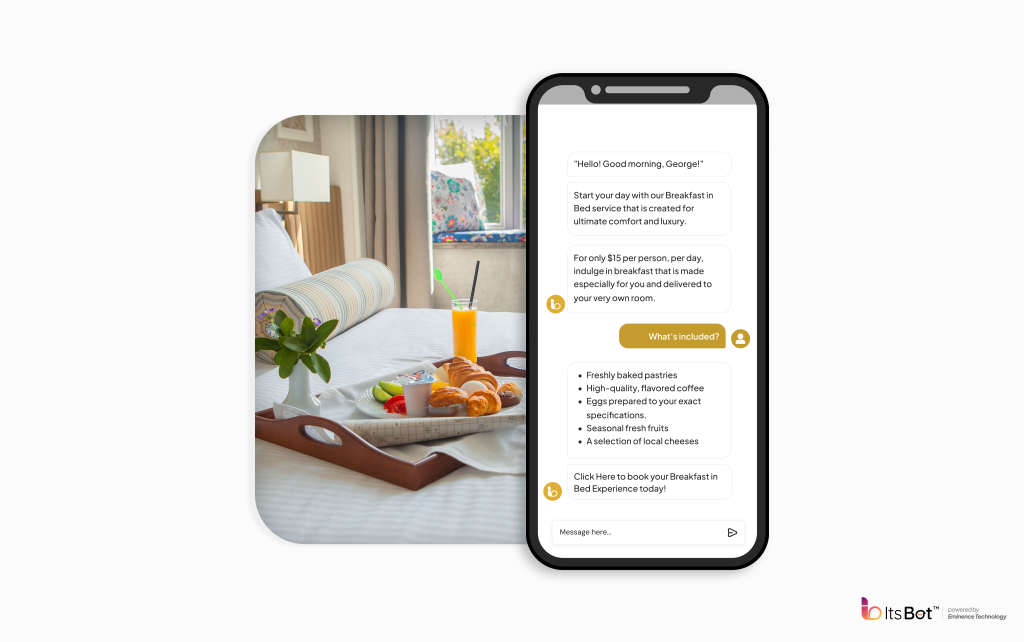
The process of upselling becomes very straightforward: “Would you like to add breakfast or airport transfer?” Hotels receive thousands of dollars every month from smart upselling such as this.
Conversational AI for Hotels: Creating an Emotional Network
Conversational AI in hotels extends beyond the business to create an emotional connection. If the AI recalls the personalized preferences (extra pillows, silent rooms) ahead of time. The guest can be greeted in the following way when he or she returns to the hotel: “Welcome, Mr. Sharma. We have arranged your favorite corner room views facing the city.”
During the stay, it makes recommendations for activities based on the weather, or behavior patterns. After-stay feedback through chat converts insights into action. This level of personalization drives loyalty and the reward for hotels embracing conversational AI and personalization? Up to 25% higher satisfaction levels.
Automating Hotel & Flight Booking Management for Travel Solutions
Advanced hotels take this further by automating hotel and flight booking management. Linked to airline APIs, the chatbot processes combined inquiries such as “book a room and a return flight to Delhi for next month.It has automated management capabilities for such things as rebooking for delayed flights. Dynamic Pricing ensures maximized revenue, with compliance tools for travel regulations. This makes hotels one-stop travel mates for greater customer convenience.
Hotel Booking Chatbot: How to Drive Revenue and Reduce Costs
A loyal hotel booking chatbot centers on reservations but delivers broad impact:
- 24×7 Operation: Captures inquiries across time zones.
- Voice & Multimodal Support: Growing fast, with 45% of new deployments including voice.
- Data Insights: Uncovers booking patterns for wiser marketing.
- Cost Savings: Save up to 30% of call center expenses.
Chains like Marriott lowered call volumes by 65% and retained millions annually. Smaller properties see similar gains in efficiency and direct revenue.
Real World Success Stories and Future Perspectives
Hotels using AI-powered solutions have achieved dramatic reductions in response times. While more revenue streams from up-selling (including $1,700 on an up-sale each month at a resort). As technology advances in emotion recognition and IoT (controlling room devices via chat); the applications escalate exponentially.
But, issues like privacy compliance are yet to be addressed. Still, many guests prefer simplified processes; one thing is clear. That is the trend is moving in the right direction.
Conclusion: The Need for Hotels to Adopt AI-Powered Guest Service
The year 2026 means an AI chatbot for hotels is not just necessary; it’s mandatory. This is so for staying ahead in hotel guest services. With the incorporation of guest messaging applications, AI hotel booking assistants, and Conversational AI for hotels . As well as hotel booking chatbots, guests enjoy quicker and personalized services.
And what do we get out of this move to technological innovation in hospitality? Happier guests, empowered employees, and higher profits. If your hotel hasn’t yet adopted these technologies, now is your time. The future of hospitality will be conversational, intelligent, and guest-focused.
Frequently Asked Questions
1. Do AI chatbots improve reply times to guest requests?
In the case of an AI chatbot, the guests will have their questions answered instantly at any time of the day without any penalties or extra costs. Such questions may include “What is the password for the Wi-Fi?” or “Can I have more towels?” The direct call to the reception is no longer in the middle and the issue gets solved at once. Thus the staff is only engaged in fulfilling the requests of the guests that require being personally considered.
2. Is it possible for an AI chatbot to deal with multilingual requests?
Instant communication in various languages is one of the main features and that definitely separates the language barrier between the hotel and the international guests. This is especially true for those who intend to place orders or raise issues. Along with that, the guests can receive the information in their native language instead of waiting for a multilingual staff member to come along.
3. Would the guest experience come across as unfriendly through an AI chatbot?
An AI chatbot that is well-designed adds more to the personalization. After linking to the property management system, it can greet guests by their names and go along with their stay details. It can also give, for example, an offer like “Would you like to book that spa treatment you looked at earlier, Ms. Smith?” The main goal is to handle simple inquiries, thereby, ensuring that the staff is freed up to provide awesome personal touches.
4. What are the hotels’ chatbot-enabled task types for the automation process?
Chatbot’s automation helps a hotel to easily deal with huge amounts of repetitive tasks. FAQs answering, room service orders management, and late check-out requests are among these tasks. More to this, are the arrangements of the access to hotel services like the spa, the restaurant, and taxis. Among them are also processing the guests’ check-in and check-out timing.
5. What is the way through which the chatbot contributes to the overall revenue increase?
Functional chatbots simulate up-to-date, active salespeople. In the hotel industry, room upgrade and dining reservation are just the few examples of add-ons that they would suggest during stay.
Chat Agent, AI Automation, Business

Enterprise AI Chatbot Development Service for Digital Success
Key Takeaways: Digital success is no longer defined by having an online presence. In today’s world, businesses must deliver instant, customized, and...
AI Automation, Business, Chat Agent
How Does an AI Recruiter Chatbot Upgrades Modern Hiring
Key Takeaways: Hiring has never been easy, but in today’s fast-growing market, it has become even more complex. Recruiters are always asked...
Chat Agent, AI Automation
HR AI Chatbot Solutions for Smarter Hiring Processes
Key Takeaways: Recruiting has become increasingly complex. It demands speed, experience, scale, and data-driven decisions. HR departments must manage thousands of resumes...


