



Over the last several years, the evolution of healthcare marketing has been immense. Gone are the days when patients only relied on referrals and walk-in appointments to decide which physician or hospital they wanted to receive services from. Now, many potential patients search for available providers via the internet, compare different options, read online reviews about providers and require prompt responses from providers prior to requesting an appointment.
Consequently, hospitals and physicians face new challenges as they continue to rely heavily on human-based processes to manage inquiries and provide follow-up communication regarding appointments, test results, etc. AI marketing automation doctors are the answer to those issues. Healthcare providers are able to utilize the power of AI to automate communication, scheduling and engagement with patients. As such, healthcare providers are able to streamline processes, free up staff to focus on patient care, enhance the patient experience and receive updates for all inquiries.
This marketing automation will allow physicians to stop spending time on repetitive phone calls, e-mails and “time-sensitive” tasks associated with managing patients; therefore, leaving more time for them to concentrate on providing an optimal level of care to patients. Ultimately, patients will feel as though their needs have been satisfied because they have received prompt and accurate responses to all inquiries/concerns.
Key Takeaways
- AI marketing automation for doctors improves patient engagement and response speed
- Automation reduces manual workload for clinic staff
- Hospitals and clinics can increase appointment bookings
- Patient experience becomes more consistent and reliable
- AI helps healthcare providers scale without increasing staff
How Does Marketing Automation Help Doctors?
Marketing automation for physicians uses artificial intelligence to boost patient engagement. It helps with marketing and communication by automating tasks.
- These tasks are:
- Responding to inquiries
- Booking appointments
- Sending reminders
- Following up after visits
This all happens without needing constant human input.
In health care, marketing is more than just traditional ads. It includes every interaction with patients before and after their appointments.
Patient interactions can involve
- Answering questions.
- Sharing information about office services.
- Helping book appointments.
- Keeping in touch after treatment.
Many platforms can use AI systems. These include websites, chat platforms, call handling methods, and messaging apps. When a patient makes a request, AI quickly replies using existing information. It keeps learning from each request to improve accuracy over time.
Medical marketing automation is much better than basic chatbots. It can adapt to how patients behave. Marketing automation helps adapt to patient behavior. It also identifies patient intent. Patients with urgent needs get top priority for their requests. This ensures highly personalized communication for each patient.
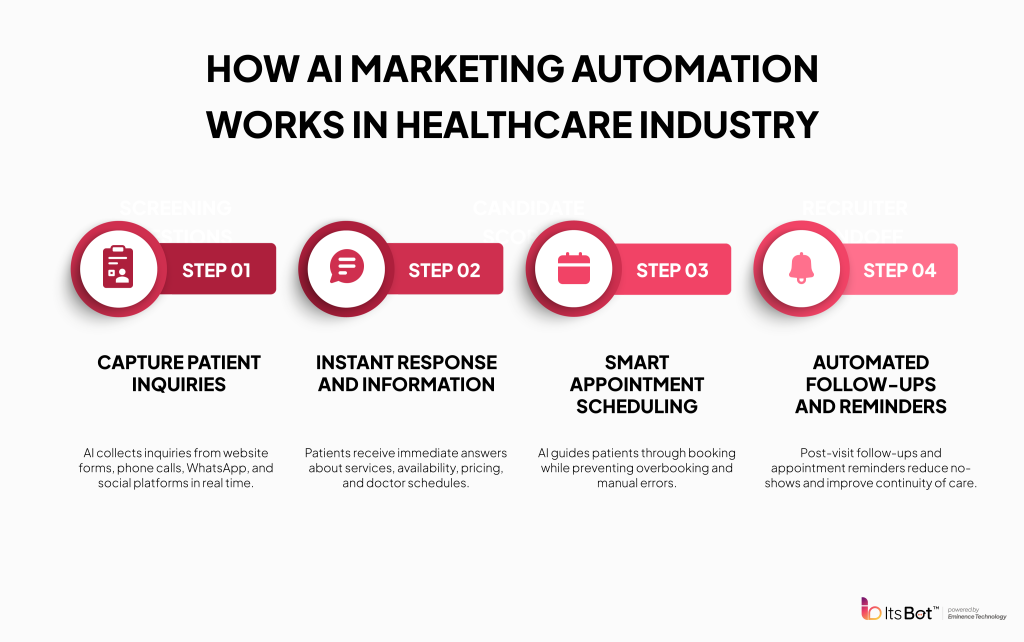
How Marketing Automation Works in Hospitals and Clinics
To see how marketing automation affects healthcare, we need to look at how AI functions in this field.
Capturing Patient Inquiries Across All Channels
AI gathers patient inquiries from different sources. These include clinic websites, contact forms, phone calls, WhatsApp messages, and social media. Systems that enable online reservations, rescheduling, and cancellations are preferred by 77% of patients. Rather than requiring manual handling of these patient inquiries to collect the necessary information, AI will take the information from the patient inquiry to present it to the clinic in real-time.
Providing Instant Information and Booking Assistance
AI will provide patients with important details. This includes clinic hours, a doctor’s schedule, treatment information, consultation costs, and booking instructions. It will also guide them through the appointment booking process.
Appointment Confirmation and Automated Reminders
After booking their appointment, the AI will remind the patient. It can also reach out to those who haven’t completed their bookings.
Post-Visit Follow-Ups and Continued Care Support
After the patient has completed their visit, AI may send follow-up request regarding the patient’s treatment and can provide them with additional information regarding their continued care.
This entire process occurs on an ongoing basis, so that the clinic does not miss a single opportunity to connect and engage with their patients.
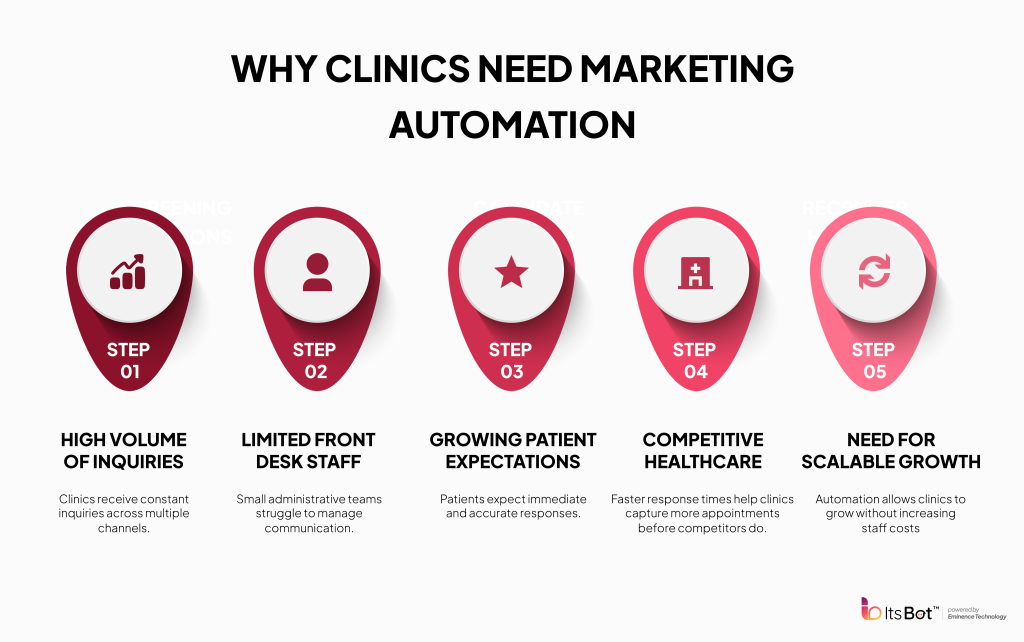
Why Automation Is Important in Healthcare Marketing
Automation helps healthcare providers manage growing demand without overwhelming their teams.
High Volumes of Inquiries
Hospitals and clinics get a lot of inquiries daily through email, voice, and chat. This can lead to missed opportunities and long response times when handled by people.
Limited Administrative Resources
Very few clinics have more than one or two persons staffing the front desk. These individuals typically manage patient appointments. They also handle billing issues and assist patients in navigating the clinic.
Growing Patient Expectations
Patients and consumers want quick replies and clear answers to their questions. If your clinic takes a long time to respond to inquiries, consumers may view it as unreliable.
The Highly Competitive Healthcare Marketplace
Many consumers compare services from different providers. Often, the first provider to respond to a consumer’s question gets the appointment.
AI Marketing Automation for Physicians helps practices tackle these challenges. It ensures quick, accurate, and consistent communication with consumers. Plus, it doesn’t add extra work for the staff.
Importance of Marketing Automation for Doctors
AI marketing automation matters for more than convenience. It boosts clinic growth, enhances patient satisfaction, and improves operational efficiency. AI helps patients book appointments by understanding what they need. When patients reach out, they are seeking healthcare at that time. If clinics respond quickly, there is a greater chance to book them.
Automation helps reduce human errors. It cuts out manual data entry, which can cause missed patient communications. This also leads to inconsistent information about those communications. Every time a patient talks to an AI database, they will get standard responses.
Physicians will face fewer distractions from non-clinical tasks. This allows them to focus more on treating patients. As a result, patients will enjoy a more professional experience.
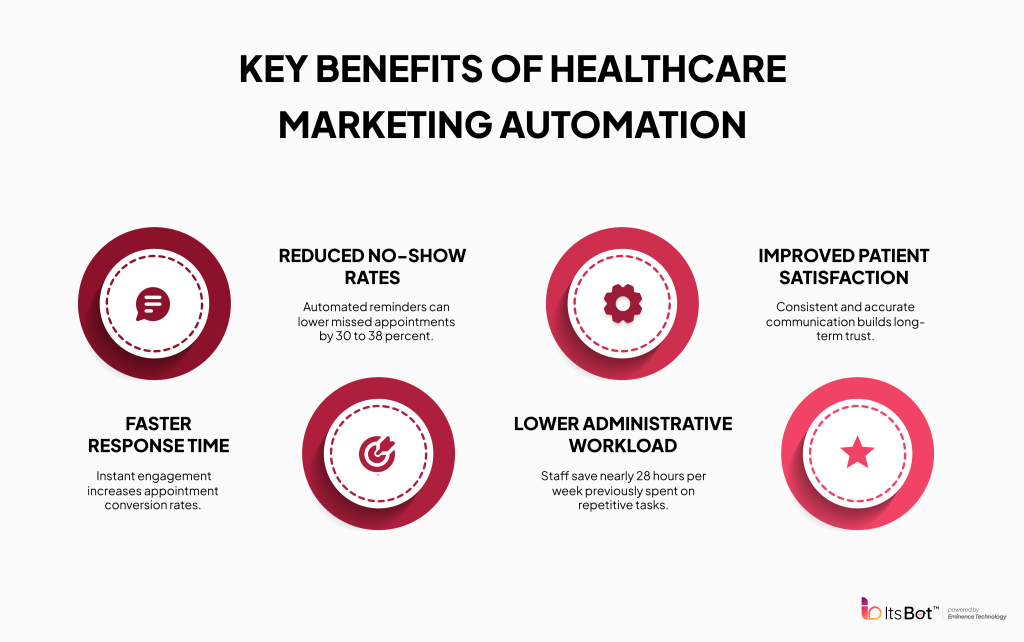
Benefits of AI Marketing Automation After Implementation
AI marketing automation offers clinics and hospitals many benefits. Once implemented, it boosts patient engagement and streamlines daily operations.
Improved Appointment Conversion Rates
Responding quickly to your patients grabs their interest. This helps turn their request into a real appointment after they show intent.
Reduced No Show Rates
Automated reminders for patients about their upcoming visits help them remember their appointments. This also cuts down on last-minute cancellations.
Better Use of Staff Time
Clinic staff can spend less time on repetitive questions. This way, they can focus more on the clinical side of their work.
Consistent Patient Communication
Every patient gets the same accurate information, no matter the communication channel used.
Scalable Growth
As the volume of patient inquiries increases to overwhelming levels, automating will allow AI systems to handle volume without hiring additional staff.According to report healthcare professionals face nearly 28 hours each week dedicated to administrative tasks instead of direct patient care, according to healthcare industry reports and workflow studies.
How AI Marketing Automation Is Better Than Manual Marketing
Manual marketing relies heavily on human availability and consistency. While human interaction is important, repetitive tasks can be automated more effectively.
Always Available
Manual systems operate during office hours. AI operates 24 hours a day.
Faster Response Time
AI responds instantly, while manual responses may take minutes or hours.
Data Driven Improvements
AI analyzes performance data and optimizes responses automatically.
Lower Operational Costs
Automation reduces the need for hiring additional administrative staff.
Reduced Errors
AI minimizes mistakes caused by fatigue or oversight.
For healthcare providers, ai marketing automation for doctors offers a reliable and efficient alternative to manual workflows.
Use Cases of AI Marketing Automation in Hospitals
Hospitals manage multiple departments and specialists, making communication complex. AI makes operations smoother. It directs inquiries to the right department and manages appointments well.
AI can answer common questions from various specialties. It can This reduces confusion and improves patient flow.
Hospitals also benefit from centralized communication data. AI systems gather insights. These help management enhance service delivery and boost patient engagement strategies.
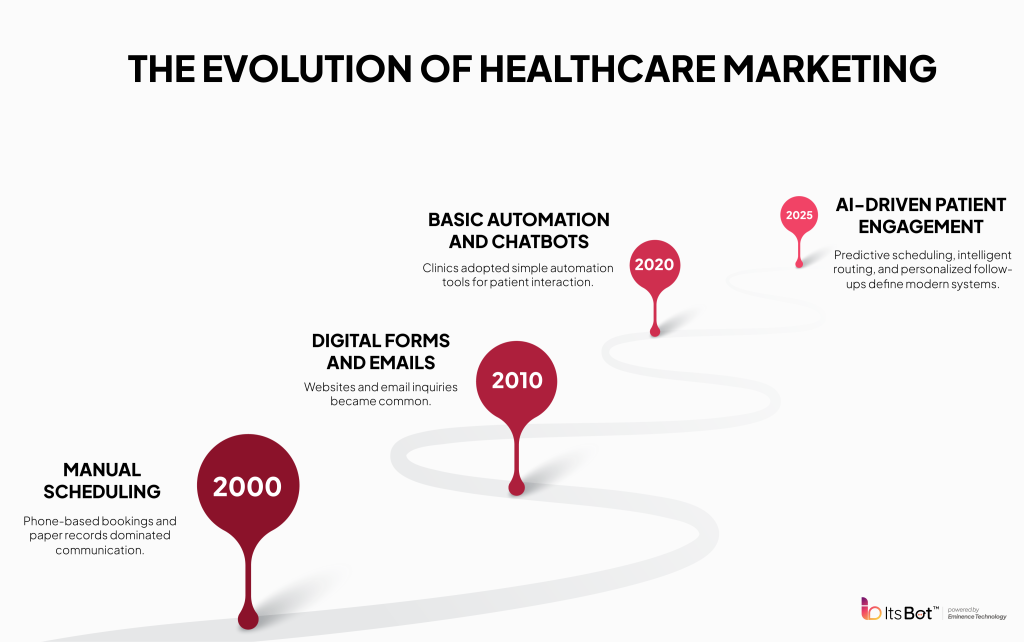
Future of AI Marketing Automation in Healthcare
As AI technology evolves, marketing automation will become even more personalized and predictive. Future systems may anticipate patient needs, suggest follow ups, and improve long term engagement.
Healthcare providers who adopt automation early gain a competitive advantage. They build stronger patient relationships and operate more efficiently.
Medical marketing automation is no longer optional. As today’s healthcare practices now consider this a fundamental need.
Conclusion
Medical marketing automation is transforming how hospitals and clinics manage patient engagement. Automating communication, appointment scheduling, and follow-ups helps healthcare providers work more efficiently. This way, they can maintain quality while saving time.
Automation ensures faster responses, better patient experiences, and reduced administrative stress. Doctors regain valuable time to focus on patient care while AI handles repetitive tasks in the background.
Clinics using AI-driven automation thrive in today’s tough healthcare market. This helps them grow and earn patient trust.
FAQs
1. Is AI marketing automation suitable for small clinics?
Yes, AI marketing automation fits well with small clinics when staff are few. Handling questions, booking visits, or later checks happens smoothly – no need to bring someone new on board. Bigger clinics can miss messages if they wait too long. So, quick replies from AI really help. Because of this setup, clinics run smoother day by day – less paperwork means less stress. They keep up with service without having to copy what big hospitals do. Quality stays intact even when things stay small.
3. How secure is AI marketing automation for healthcare?
AI marketing automation platforms in healthcare must follow strict data protection rules. They also need to comply with regulations. Many systems are built to align with healthcare regulations and data privacy. These platforms provide secure communication, controlled access, and safe data storage. They help protect sensitive information. When done right, AI automation boosts efficiency. It does this while keeping patient trust and medical data safe.
4. Can AI handle appointment scheduling accurately?
Yes, the AI system can manage appointments efficiently and precisely. Coordinating with the clinic’s calendar helps avoid over-booking. It also handles rescheduling requests. It sends appointment confirmation messages to patients and doctors. Through human error prevention, the AI system ensures accurate scheduling of appointments. Patients can book appointments quickly. This leads to smoother scheduling and fewer conflicts at the clinic. This benefits both doctors and patients regarding time utilization.
5. How quickly can a clinic see results after implementation?
Many clinics see clear positive results just a few weeks after launching AI marketing automation. Clinics might see faster response times, more booked appointments, and fewer no-shows. Performance keeps getting better as AI systems learn from customer interactions. Clinics can enjoy better organization. Staff will have less workload. Patients will have a consistent experience across all communication channels.
AI Automation, Chat Agent
HR AI Chatbot Solutions for Smarter Hiring Processes
Key Takeaways: Recruiting has become increasingly complex. It demands speed, experience, scale, and data-driven decisions. HR departments must manage thousands of resumes...
Business, Chat Agent
Best AI Chatbot Solutions for US-Based Businesses in 2026
Key takeaways: App timelines shift based on scope, workflows, and how clearly the project is defined on day one. Complexity, integrations, and...
Business, Chat Agent
Step-by-Step Guide to Build a Lead Generation Chatbot
Businesses are constantly looking for better ways to capture and convert leads in the fast-paced world of the modern digital age. Reaching...